









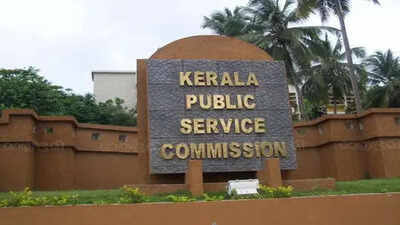
U Kerala Public Service Commission (PSC) has come under scrutiny after serious irregularities were discovered in the evaluation of a recruitment exam conducted for senior positions in the State Planning Council. The controversy prompted the Commission to cancel the existing ranking list, order a re-evaluation of the answer scripts and initiate an internal surveillance inquiry to determine how the lapse occurred.The issue raised concerns about the transparency and credibility of the recruitment process, especially as an appointment had already been made based on the canceled rank list.
What triggered it Kerala PSC assessment controversy ?
The controversy surfaced after K Shyam Krishna, who secured the third rank in the recruitment exam, obtained a copy of his assessed answer writer after questioning the marks allotted to him.In reviewing the script, he discovered that the answers to questions 9 to 18 in the descriptive exam of 100 marks were not evaluated. Later, he filed a formal complaint with the Kerala PSC, prompting the Commission to verify the allegation.During its preliminary examination, the PSC stated that the same group of 10 questions was not evaluated in the answer scripts of all 228 candidates who appeared for the examination, indicating that the cancellation was not limited to a single candidate.
Which recruitment exam is involved?
The contested exam was held on July 13, 2023, for the recruitment to three senior positions in the State Planning Council:
- Chief (Industry and Infrastructure)
- Head (Foresight Planning)
- Head (Planning Coordination)
These are senior government posts that carry a basic monthly salary of around Rs 1.25 lakh. Although the exam was held in 2023, the ranking list was published on May 31, 2025.
What action did Kerala PSC take?
After a meeting on Monday, the Kerala PSC announced a series of corrective measures to address the irregularities.The Commission canceled the existing ranking list and ordered a new evaluation of the 10 responses that had not been evaluated. Based on this reassessment, a revised ranking list will be prepared.The PSC has also ordered a complete re-evaluation of all answer scripts to determine whether the lapse resulted from human error, deliberate manipulation or the involvement of any official in the evaluation process.An internal vigilance inquiry has also been ordered, with the Superintendent of Police (SP) of the vigilance wing of the Commission leading the investigation.What happens to appointments already made?An appointment had already been made from the now canceled ranking list. Arun J. Prathap, who secured the first rank in the examination, was appointed as Chief of the Industry and Infrastructure Division last year.The Commission has not yet clarified whether the revised assessment and the new classification list will have an impact on the appointments that have already been made.
The court is looking for explanations
The controversy gained wider attention after media reports highlighted the alleged assessment lapses. The matter has since reached the Kerala Administrative Tribunal, which has ordered the Kerala government and the Kerala Public Service Commission to submit their explanations within three weeks.With the rank list cancelled, answer scripts set for fresh evaluation and an ongoing vigilance investigation, the controversy has emerged as one of the most significant recruitment issues faced by the Kerala PSC in recent years, raising important questions about evaluation procedures and institutional accountability.