






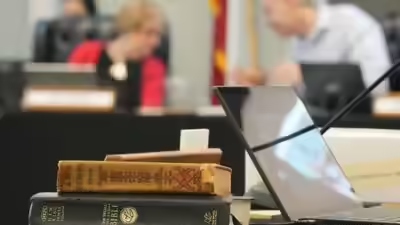
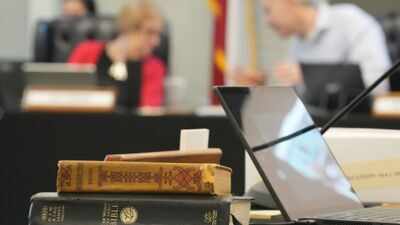
For decades, the debate over religion in America’s public schools has played out in courtrooms, classrooms and election campaigns. Now, Texas has become the latest battleground after approving a statewide reading list that makes Bible stories required reading for more than five million public school students. The decision, approved by the Republican-controlled Texas State Board of Education, will begin to be implemented in 2030. It includes passages from the Bible alongside literary classics such as Great Expectations and Don Quixote. While the Bible is essential to understanding American history and literature, the move crosses the constitutional line that separates religion and state.The latest decision is part of a much broader policy shift in Texas rather than a stand-alone education reform. In recent years, the Republican-led state has introduced a series of policies that seek to expand the role of religion in public schools. In 2023, Texas became the first US state to allow schools to hire chaplains to counsel students. In 2024, he approved an optional elementary curriculum containing Bible lessons. Lawmakers also passed a law requiring the Ten Commandments to be displayed in every public school classroom, a measure that was recently upheld by a federal appeals court. The required Bible reading list is the latest addition to that growing list.
More than Bible stories
The board of education did not stop with the reading list. This week, he also approved major changes to Texas’ K-8 social studies curriculum. According to the Texas Tribune, the revised lessons place a greater emphasis on Christianity, Western civilization and Texas history, while reducing the emphasis on racial, geographic and cultural diversity. Some high school curriculum changes are still under consideration.The reading list and curricular changes together represent an effort to revamp the way American history is taught. and restore the historical context that is allegedly neglected.
What happens in Texas, doesn’t stay in Texas
Texas not only runs one of the largest school systems in America; it helps shape what students across the country read. The state has about 5.5 million public school students, about one in every 10 public school children in the United States. Because of its size, textbook publishers often develop books and teaching materials with the Texas curriculum in mind. Education experts say changes made in Texas often affect what is published and sold to other states. That makes curricular decisions in Texas far more significant than similar changes elsewhere.
A broader conservative push
The Bible reading plan comes as Republican leaders across the United States seek a greater role for religion in public education. President Donald Trump has repeatedly said he wants to protect and expand religious expression in schools. During his 2024 campaign, he pledged to “support bringing prayer back to our schools” and said his administration would “protect Christians in our schools.” His educational platform also promises to defend religious freedom and expand faith-based initiatives.Several Republican-led states have also introduced religious-related education measures. Louisiana moved to require the Ten Commandments in the classroom, while Oklahoma education officials pushed for greater use of the Bible in teaching. Supporters argue that these measures recognize the influence of Judeo-Christian traditions on American history and values. Critics, however, say public schools should remain religiously neutral and warn that government-backed religious education could marginalize students from Muslim, Jewish, Hindu, Sikh and other faith communities, as well as those with no religion.
The constitutional question
At the heart of the controversy is the First Amendment. American courts have long held that public schools can teach religion as part of history, literature or culture, but cannot promote or endorse a particular religion. With implementation expected to begin in 2030, legal challenges are expected, which means the debate over religion in American classrooms is far from over.The Texas Vote is about much more than a state school reading list. It reflects a larger battle over who gets to define American identity, what children should learn in public schools and how much religion should shape government-funded education.