










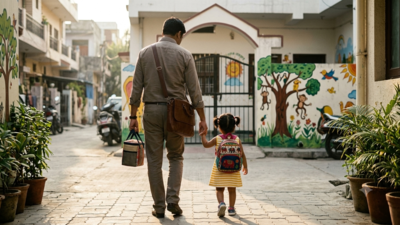
Every morning, millions of Indian parents go through the same routine. They wake up early, get their kids ready, pack a small bag with clothes, bottles and snacks, drop them off at a daycare and rush to work. Saying goodbye is often the hardest part of the day, but it’s built on trust.This trust was shattered long after the alleged abuse of children at a daycare center operating at the Capgemini campus in Bengaluru. The videos appear to show children being physically abused by staff. Five childcare workers were arrested, and the investigation continues.For many Indian families, day care is no longer a convenience. It has become a necessity. When both parents work, who can they really trust with their children?In the last two decades, family life in India has changed rapidly. Young professionals are increasingly moving to cities for work, often leaving their parents behind in their hometowns. Joint families are becoming less common, and many couples are raising children without the daily support of grandparents or other relatives.Some families still manage with the help of grandparents, with one sector staying for a few months before the other takes over. Others rely on relatives or trusted domestic help and a CCTV camera. But for many parents, these arrangements are not possible. Grandparents may live in another city, may have health problems or may even work themselves.At the same time, the cost of raising a child has increased significantly. Rent or home loans, health care, school fees, transportation and daily expenses have made two incomes a financial necessity for many families. Giving up a salary is not an option that every family can afford.This has made day care an essential part of life for thousands of working parents, especially in cities like Bengaluru, Mumbai, Delhi, Hyderabad, Pune and Gurugram.
The Bengaluru shocker
The Bengaluru incident disturbed parents not only because it involved very young children, but also because the day care was operating on the campus of a globally recognized company.One would expect that daycare centers on corporate campuses are likely to have better supervision and stricter safety standards. But the videos allegedly show children subjected to physical abuse. As troubling as the Bengaluru case is, it is not the first time concerns have been raised about childcare centers in India.In recent years, several cities have reported cases in which city workers have been accused of physically assaulting children, locking children in rooms, neglecting them for long periods or using harsh methods to discipline them. There have also been incidents where poor supervision has resulted in children being injured.
The warning signs are easy to miss
Parents often expect children to take time to adjust to day care. It is common for babies to cry during the first few days or become attached to the fall.But parents should also watch out for sudden changes in behavior. A child who suddenly becomes fearful, refuses to go to daycare, has nightmares, stops eating well or becomes unusually withdrawn may be trying to communicate that something is wrong.These signs do not always indicate abuse, but they should never be dismissed without trying to understand what has changed.
Choose a day care
Choosing a nursery involves much more than looking at colorful classrooms or impressive facilities.Parents should spend time observing how caregivers interact with children and whether they seem patient and attentive. They should ask about staff background checks, emergency procedures, the caregiver-to-child ratio and how complaints are handled. Talking to other parents whose children attend the center can often provide a clearer picture than ads or social media pages.Parents also preferred day care centers that have CCTV cameras and transparent monitoring systems. Some centers also allow parents to check live or recorded footage through secure apps, which can offer more peace of mind and improve transparency.