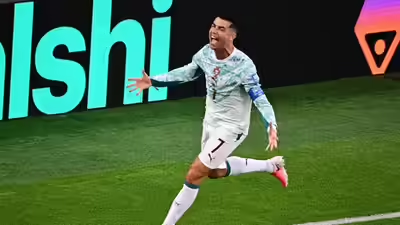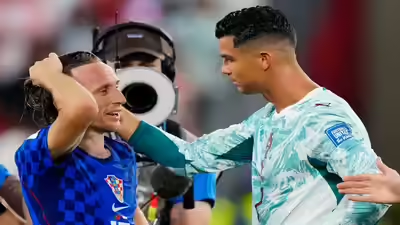








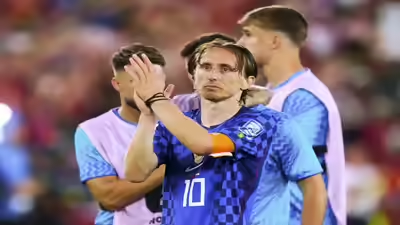
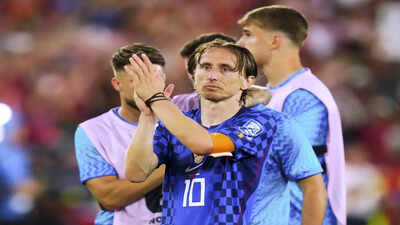
Luke ModricAfter retiring from the World Cup stage and international football, he did not become the ideal beauty or the perfect number 10, a number that he had created so endearingly and charmingly over the years. The ending, however, is dramatic—and brutal. When Croatia thought Josko Gvardiol’s late equalizer against Portugal was enough to defy the inevitable, entering VAR turned it into a sensational event with its usual plot twist. Modric looked calm and distant from the chaos around him, his face reflecting a clear resignation to his fate as he was slowly enveloped in a warm embrace. cristiano ronaldo. It’s a cathartic moment. Among the two middle-aged men, ronaldo Now deeper into the competition, Modric’s fifth bid for the top prize will remain elusive. “I have played with Luka for many years. We are almost the same age. He is a football legend; he remains a football legend because he has always played so well and has such great qualities. It is unbelievable,” Ronaldo later let the world know how he felt. The 40-year-old Croatian, often hailed as the greatest player to come out of the proud little Central European nation, capped off his World Cup career with a silver and bronze medal as well as Ballon d’Or and Bronze Ball trophies. An athlete’s eternal desire to complete an endeavor is often accompanied by its presumed value and reassuring imperative, but judging Modric through this lens is anything but a traditional valediction. Because pity was never necessary to generate passion in his game, because his football was always imbued with a life-affirming essence. This is what makes him unique and perhaps provides a more humanistic concept of a sports hero. If Davor Suker, the remarkable goalscoring machine who helped newly independent Croatia to a third-place finish at the 1998 World Cup, represented a symbol of hope and happiness, then Modric continued that tradition, becoming the bridge between the country’s stunning arrival and its new identity as a 21st-century football powerhouse. Modric himself is a child of Croatia’s independence struggle, and his early years made him a refugee who moved from one place to another in order to survive. Fortunately, instead of taking up arms, he found peace in the chaos of football. His football has since been about restoring order to chaos, which has helped him rise above mediocrity. In his delightfully captivating presence, in those gorgeous outside-the-boot flicks or crosses, the beauty is like an object beyond elegance, like Roger Federer’s backhand – conjuring up the mystery of how to turn defense into attack, and attack into winning shots before your opponent can get a hold of them. Like all No. 10 players, he is a classic dreamer on the ball. Tottenham gave him the platform to announce his arrival, while it was at Real Madrid that he truly found the theatrical stage to realize his dream, combining his approach with a determined rhetorical fantasy. It’s never a stereotype, but a symphony of pure joy. His rise to prominence at the heart of the Spanish club coincides with Croatia’s most successful period in international football, finishing second at the 2018 World Cup and third in Qatar four years later. In his final dance on the world stage, he may fall like an old king, but not before thrilling the audience. Football will feel a bit empty right now, but Modric’s legacy will be lasting.